After being referred to the hospice, Dorcas found compassionate, personalised support that helped meet her practical, emotional and spiritual needs. Her story shows how faith and palliative care can work side by side, providing comfort, strength and support through uncertainty.
Dorcas is a 59-year-old clothes maker from Kidbrooke living with stage 4 breast cancer. She was first diagnosed in 2017 after finding a lump in her right breast. In 2022, she discovered another lump in her left breast, which was also cancerous. She underwent further treatment, including eight rounds of chemotherapy and radiotherapy, and continues to take medication today to help manage her condition.
She was referred to the Community Hospice in February 2026 for support from the palliative care social work team. She said: "I didn’t know anything about hospice care before I was referred. I’d never heard the word ‘hospice’ before."
Dorcas"I didn’t know anything about hospice care before I was referred. I’d never heard the word ‘hospice’ before."
Dorcas is from Nigeria, where hospice care is not widely available or recognised, so it’s not surprising that the concept of the service was unfamiliar to her. Because she didn’t know what a hospice was, she didn’t have fears about what the referral might mean for her.
"When I was referred, I didn’t think anything bad. Then I told a friend and she asked, ‘Are you going to die?’ I also told my sister that they had referred me to the hospice and that they were here to help me."
Finding comfort through support
She was right about the hospice being there to help. The support she received quickly became an important source of comfort. Since being referred, Dorcas has accessed emotional, spiritual and practical support, including help to secure financial assistance.
"When I started receiving support from the hospice, I was happy because I met lovely people – everyone at the hospice is nice. All of them! When I call them, they say, ‘Dorcas! How are you? Do you want me to come and see you?’ My case worker is Tracey and she supports me with everything I need.
"It’s made a difference because I have someone to talk to, someone I can pour my mind out to, so my mind is free. If I need them, if I want to see them or call them, they answer me and help me."
Dorcas"It’s made a difference because I have someone to talk to, someone I can pour my mind out to, so my mind is free. If I need them, if I want to see them or call them, they answer me and help me."
When faith and hospice care meet
Throughout Dorcas's cancer journey, one thing has remained constant – her faith. Even during the most challenging periods of treatment, her belief that she will recover has remained strong. She said "I know that everything is going to clear. I feel OK, I feel strong and I know God is working with me.”
For some people, faith and hospice care can appear to contradict each other. Tracey – who is the team lead for psychological, social and spiritual care at the hospice, and Dorcas’s case worker believes an important part of her role is helping people navigate this.
"Sometimes, if you're a person of faith and believe in the power of God, that can seem to conflict with what hospice care is about – namely accepting the medical support that is offered. But actually, the two can coexist and complement each other."
She explains: "You can have a palliative diagnosis, receive treatment, be under hospice care and still have your spiritual needs met. One doesn’t cancel the other out. At the hospice, we ask people how they would like to be supported spiritually. In Dorcas’s case, what was important to her was prayer, so we pray together regularly. This brings connection and comfort at a scary time when the future is uncertain."
Tracey, team lead for psychological, social and spiritual care"You can have a palliative diagnosis, receive treatment, be under hospice care and still have your spiritual needs met. One doesn’t cancel the other out."
Finding space for what matters
Dorcas’s experience shows how faith and medical care can work side by side, helping her to find comfort and strength while continuing to make decisions about her treatment. For Dorcas, that balance means continuing to take her medication while holding firmly to her faith.
"I went to the doctor who told me that the medication isn’t working and that I should have more chemotherapy. But I told them I don’t want any more chemo. I’ve had a lot of chemotherapy already. I put my trust in Jesus."
By providing compassionate, personalised support, Tracey has helped Dorcas hold on to what matters most to her. Her story demonstrates that palliative care is not about choosing between faith and medicine. For many people, including Dorcas, it is about finding space for both.
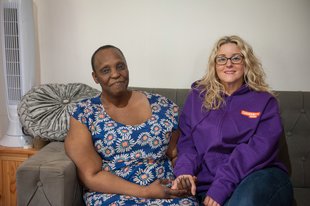
Dorcas and Tracey